WordPress
The EU-Captcha plugin protects the forms of WordPress and of the usual form plugins. It does the widget and the server-side verification.
Setup of the plugin in WordPress
Requirements
The following requirements must be met:
| Requirement | Value |
|---|---|
| WordPress | from version 5.8, tested up to version 6.9 |
| PHP | from version 7.4 |
| Access | Administration area of WordPress |
Protected forms
The plugin protects these forms:
- login of WordPress
- registration of WordPress
- comments of WordPress
- Contact Form 7
- Ninja Forms
- WooCommerce Checkout
- WPForms
Set up the plugin
Proceed as follows to set up the plugin:
- ► Upload the
eu-captchafolder into the/wp-content/plugins/directory of your installation.
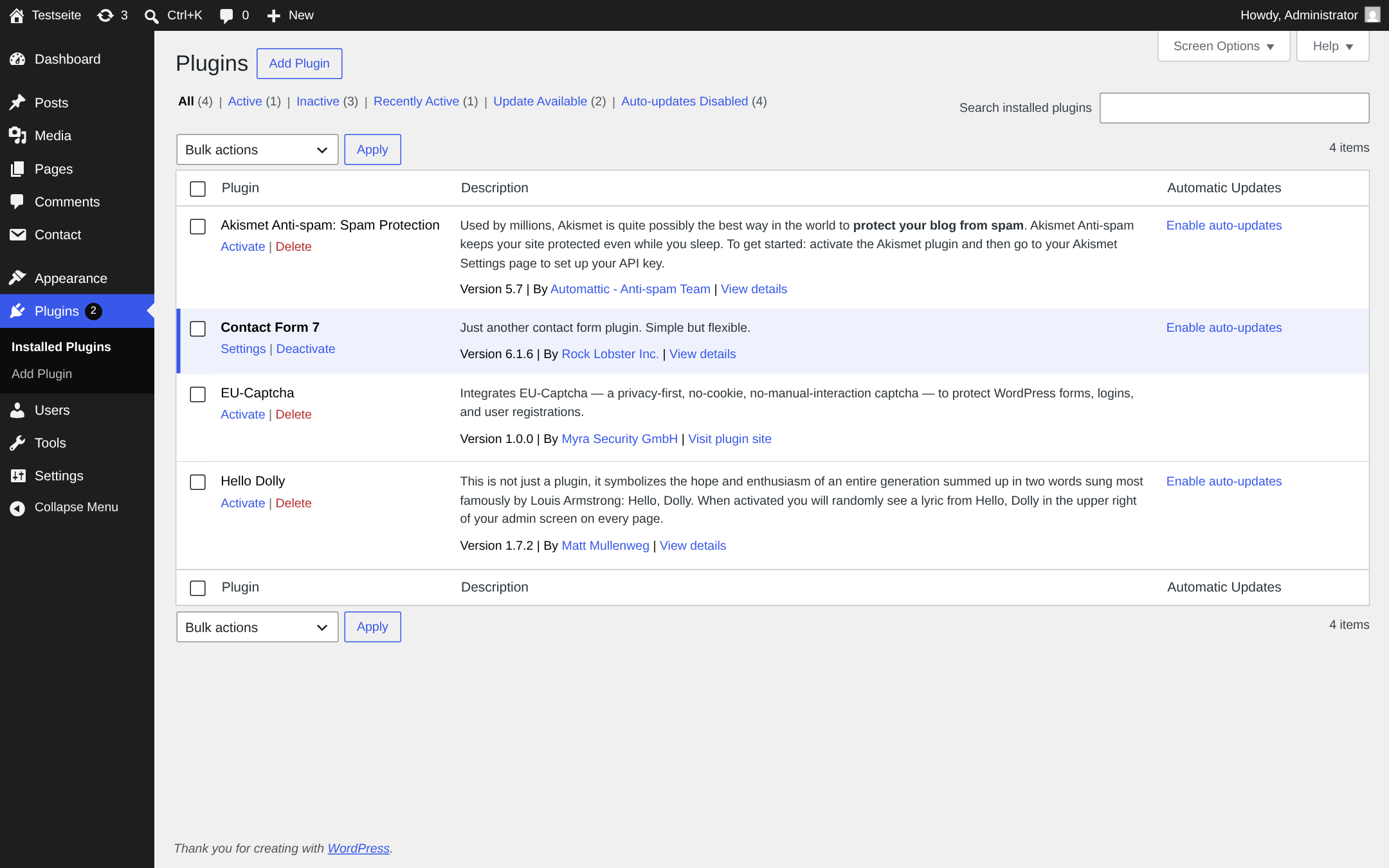
List of the plugins with the EU-Captcha plugin
- ► Activate the plugin in the Plugins menu.
- ↳ The EU-Captcha settings page is available.
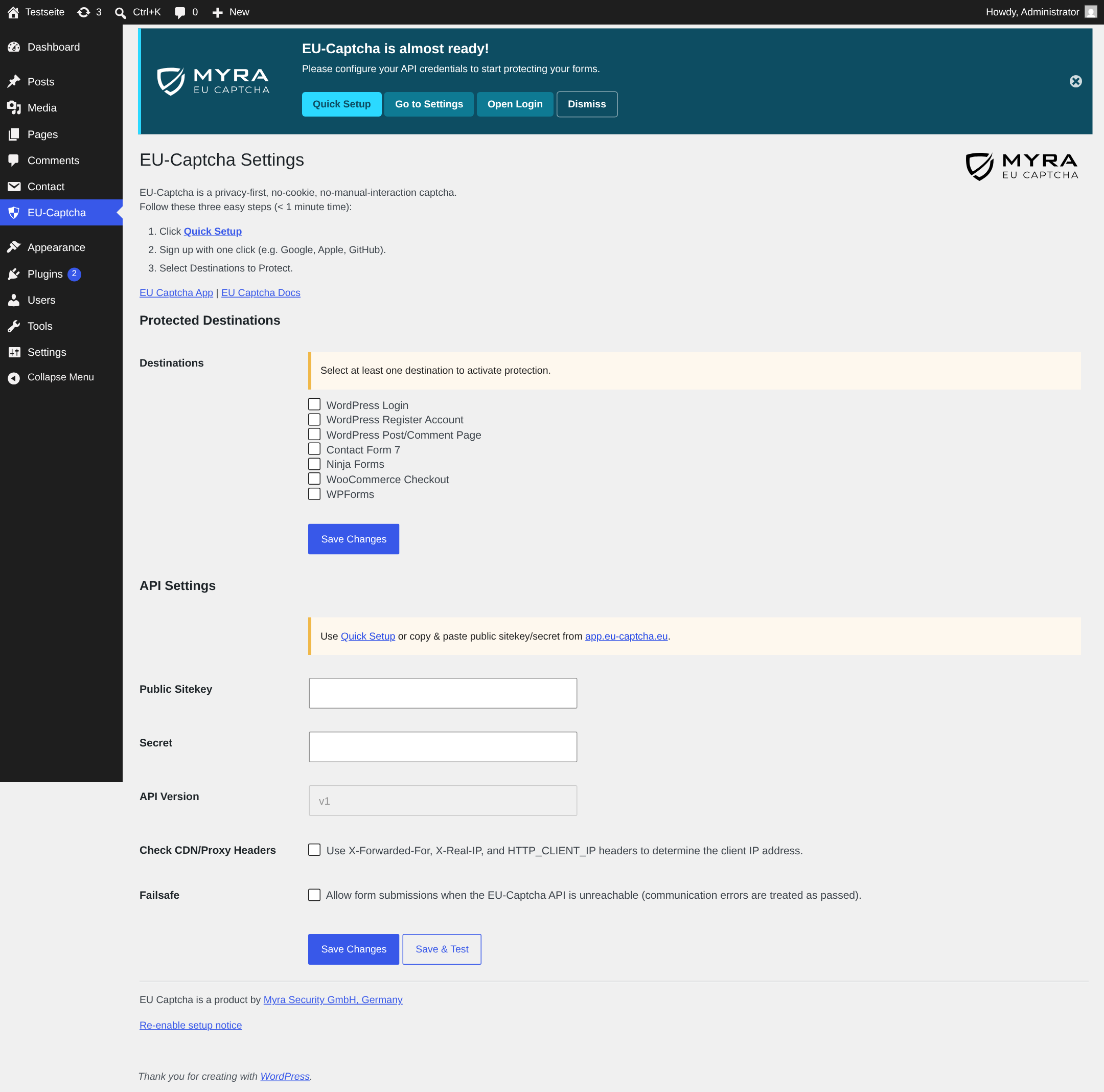
EU-Captcha settings page
- ► Open the EU-Captcha settings page.
- ► Click on the Quick Setup button. As an alternative, enter the public sitekey and the secret manually.
- ► Below Protected Destinations, select the forms to protect.
- ► Click on the Save Changes button.
- ➔ The plugin embeds the widget in the selected forms and verifies the tokens on the server.
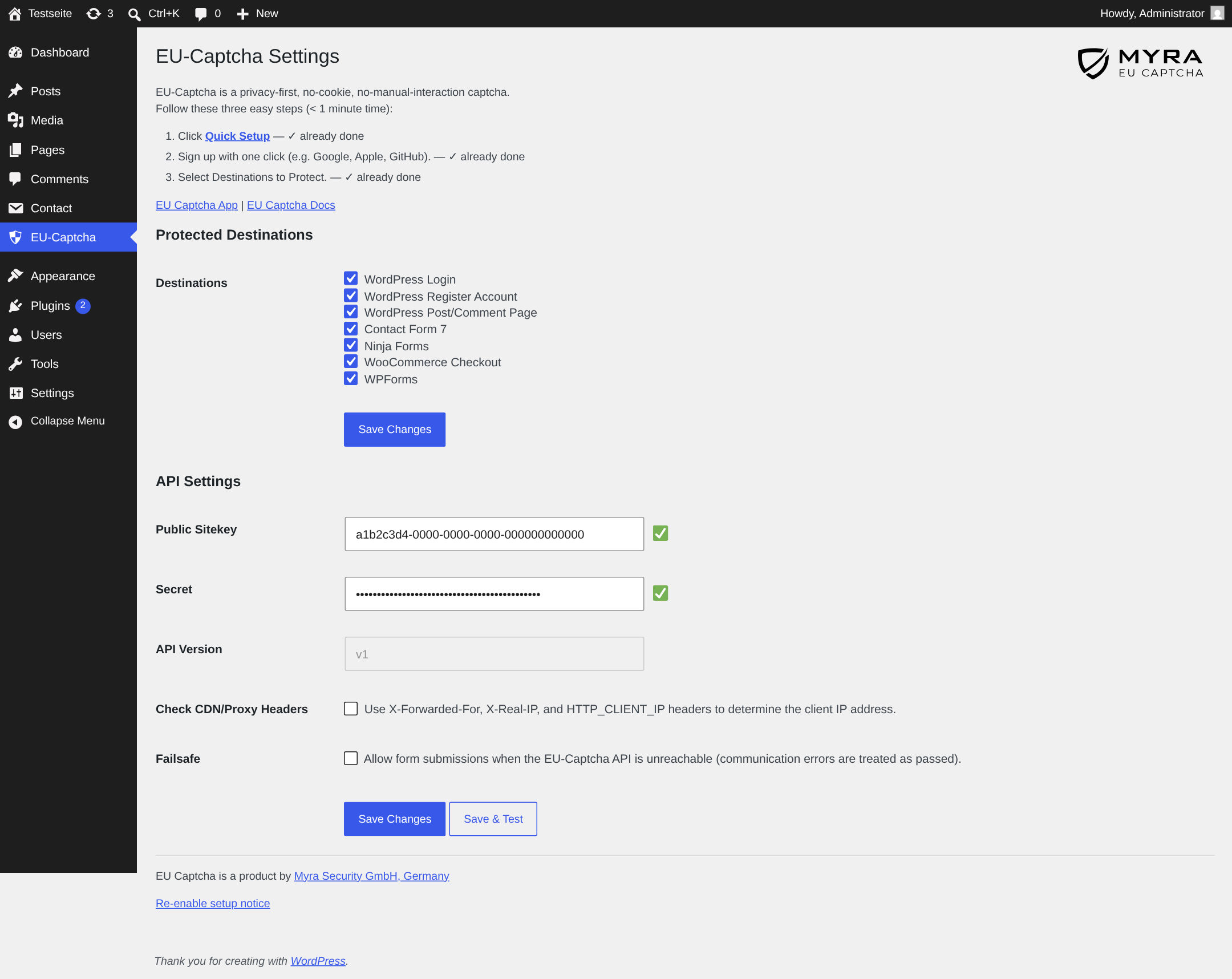
EU-Captcha settings page after saving
Behaviour during a malfunction
By default, the plugin refuses a transmission if the API is not reachable. Thus, the protection cannot be bypassed during a malfunction.
The Failsafe option in the settings below API Settings changes this behaviour: transmission errors such as timeouts or name resolution errors then count as a verification that passed. The plugin continues to refuse invalid responses.
Warning
With the Failsafe option activated, your form stays available during a malfunction. The form is unprotected during this time.
Protect your own forms
The plugin supplies the eu_captcha_verify() function. With it, other plugins and themes verify a token with the credentials that are already stored.
Add the widget element to your form:
Verify the token during the transmission:
if ( function_exists( 'eu_captcha_verify' ) ) {
    $token  = sanitize_text_field( $_POST['eu-captcha-response'] );
    $result = eu_captcha_verify( $token );
    if ( ! $result ) {
        wp_die( 'Captcha verification failed.' );
    }
}
The function returns true for a valid verification, and false for an invalid token, missing credentials, or an error of the API. Always examine with function_exists() first, so that your source code also operates when the plugin is deactivated.
The plugin embeds the verify.js script on all pages of the frontend and on the login page itself.